Monday, 6 April 2020

DIGITAL PAYMENT!

It is seen that digital payment is very beneficial when it comes to ease and saving the trees but beside that, there are many more advantages for doing digital payment.

Today, there are many apps like Google pay, PhonePe, Paytm, BHIM UPI, and many more.

But using these apps, we need some reasons to push ourselves! 


What are the advantages for using it?
Here are some of the advantages 


Benefits of digital payments

Digital payments allow buyers to pay directly from their banks.
Digital payments allow merchants to sell to other countries and customers to pay in foreign countries.
Tracks and maintains the digital record of every transaction
No fear of losing cash or getting fake currency
Merchants can collect payments remotely
Digital payments offer cashbacks or reward points

As online businesses, as well as purchases, have become a current trend in India, going digital offers the following benefits to the users:

Ease of carrying out transactions

This is one of the major benefits of digital payments. For those who carry out transactions on a daily basis for buying some, or the other product or service, going digital is quite beneficial. It aids the user by giving an option that is safer, quick, and convenient during the traveling time.

It helps the user be free of carrying wads of cash, plastic cards (debit, credit, etc.) and even helps in letting go of queues for ATM withdrawals.

Moreover, online payments can be carried out without any hassle during the times of emergency as it does not require one to be physically present anywhere for the money to be paid. E. g. Digital wallets: Digital wallets provide a quick, seamless and convenient way for merchants as well as customers

This also helps save the immense time of the user so that the user is able to utilize time for other important tasks/aspects.


Provision of Discounts

Going digital can benefit the users in terms of discounts provided to them for various occasions as well as purchases. For example, for encouraging people to use the digital method of making transactions, the government announced a waiver of service tax on debit and credit card transactions up to Rs 2,000.

Such incentives and measures by the government help people be more digital-friendly, and thus, helps the government keep tabs on tax evasion.

Moreover, the customer avails the benefits of discounts online every now & then and gets a fair price for the product/service needed.


Better way to Observe Spending

With digital payments being convenient not only in other aspects but also in terms of keeping a record of the payments done so far, it is but easy to be accountable. When the payments are made via digital channel, it is easier to file income tax returns and also is easier to explain the spends in case of scrutiny.


Helps in Better Investments

As making transactions digitally helps individuals observe their spending, psychologically speaking, it becomes obligatory to ward off some of the expenditures. This, in turn, helps increase savings, which can lead to an increase in investments. Hence, with online payments, there are better chances of people being able to save more for investments. More investments lead to more earnings and thus, it proves to be quite beneficial for the users.


Option to deactivate in case of theft or any accident

Payments have evolved from the barter system to cash to card payments to digital payments. According to Statista, in India, the total transaction value of digital payments in 2019 amounts to US$64,787 million.

Digital payments have the upper hand over making cash transactions since a digital payment platform can be blocked immediately in case of theft. But it is not the same with cash payments, since the cash once gone, has minimal to zero possibility of coming back to you. Moreover, carrying bundles of cash with oneself while traveling is never recommended and neither is easy.


Small benefits

Many benefits of digital payments come in small packets. Whether you carry a bunch of coins with you or not, you have to never worry about keeping change-ready while making payments via the digital method. Making transactions digitally helps you pay exactly the amount that is required to be paid, and hence, makes your life much simpler this way.

While traveling, loss of cash can cause an inconvenience, using digital payment solutions seems a safer and convenient solution. There is no need to wait in the long lines to make payments, with digital payments, payments can be done much faster and from anywhere you want.

Why digital is better than papeR?


WHY DIGITAL IS IMPORTANT THAN PAPER.

Paper Beats Digital In Many Ways, According To Neuroscience


There's good news for printers and paper companies. Despite the enormous migration to electronic media, 


In the last decade, every marketer as been engaged in some kind of "print to digital" transformation. Glossy brochures, direct mail pieces, bulky manuals, and many other printed items have been replaced by a combination of web content, email, and on-demand electronic files.


This transformation is driven by how all of us consume media. We increasingly get our news, entertainment, and information via computers, tablets, and phones. Print-based media outlets have seen a decline in use and in some cases have disappeared completely.


We certainly aren't going to see a massive switch back to paper content. But, those marketers who have been looking forward to the day when print content is gone entirely may be surprised by the latest neuroscience research.


Rather than an all-digital world, it appears that a multi-channel approach that leverages the unique benefits of paper with the convenience and accessibility of digital will perform best.


For example, a study in Norway ,concluded that, "students who read texts in print scored significantly better on the reading comprehension test than students who read the texts digitally."


DIGITAL IS DOWN, BUT NOT OUT:


There are a lot of what and why and how.

One of the elements of a successful digital transformation is adapting and adopting newer ways to operate, which mostly relies on the right kind of talent, prioritizing speed and targeting milestones. But one of the most important and prime amongst all of them is getting the organization in shape for digitization.


The most recent work supporting paper-based marketing is a study sponsored by canada post and performed by Canadian neuromarketing firm trueimpact, The study compared the effects of paper marketing (direct mail pieces, in this case) with digital media (email and display ads).


The technologies used in this study were eye-tracking and high resolution EEG brain wave measurement. Conventional questionnaires were also used.

The three key metrics evaluated in the study were cognitive load (ease of understanding), motivation (persuasiveness), and attention (how long subjects looked at the content).


Sunday, 5 April 2020

Is our future digital?

IS OUR FUTURE DIGITAL?


By 2050 there will be 9 billion people to feed, clothe, transport, employ and educate. We’re committed to a growth-driven world economy that must inflate for centuries, supplying limitless consumption to everyone. With new tech, could we add a digital world that helps everyone succeed and prosper while working together? Could we become a successful world where greatness is normal?


Can a New Digital Window Display a New Future?


Preparing for the Digital Transformation: Future-Proofing Your HR ...jj


Digital transformation has been on the agenda of organizations for years and 2018-2020 is predicted to be a crucial time for leaders to plan for and implement it across industries.


"This brings it to the fore with boards, CEOs, and executive teams looking for technical and digital leadership. Leaders will put further distance between themselves and the laggards by leveraging new technologies and developing capabilities that enable them to predict customer needs and continuously stay ahead of changing customer desires." - Forrester


Leading concerns about the future of digital life.


Johanna Drucker, professor of digital humanities in the department of information studies at the University of California, Los Angeles, said, “The question ignores the growing and disastrous division between poor, disenfranchised populations and wealthy, privileged ones. There may be huge improvements in some people’s lives and negative impacts for many, many more – pollution, toxins from waste generated by electronic media, deregulation of labor conditions for workers in the high-tech industries, deterioration of support systems and social infrastructure and so on.”


Michael Kleeman, a senior fellow at the University of California, San Diego, and board member at the Institute for the Future, wrote, “Because of the economic disparity the new technologies will be used with those with access to more resources, financial and technical. The digital divide will not be one of access but of security, privacy and autonomy.”


Jillian C. York, director of international freedom of expression for the Electronic Frontier Foundation, commented, “I don’t believe that technology will be a net negative; rather, I worry and suspect that it will make life better for some of us but worse for others. Much of the technology coming out of Silicon Valley aims to serve elites, when we should be aiming toward equality for all.”
Zoetanya Sujon, a senior lecturer specializing in digital culture at University of Arts London, commented, “In my view, and drawing from the growth of global big tech companies and decreased pluralization of global platforms, I believe that in 50 years, the economic and cultural divides between rich and poor, developed and developing nations, technologically advanced and disadvantaged will continue to grow. These divides are serious and already take place within urban centers, between developing and developed nations, and between rural and urban areas, to name only a few sites of division. Thus, for those with capital, including access to new technologies and the literacies that come with them, life will likely involve wearable and ubiquitous computing based on internet and platformed communication…. These kinds of tools will likely be available only to those with the economic and cultural capital to access them.”
John Laudun, a respondent who provided no identifying details, commented, “The next 50 years is going to be great for a percentage of humans smaller than the percentage of humans for whom things will probably get worse. We continue to forget that 75% of the world’s populations are effectively peasants, individuals (living in families, groups, etc.) who engage in subsistence agriculture. Too often when we project into the future we imagine ourselves, people like us or the people we think we see. But there are hosts of groups that we do not see. How will technological advances, and their various implementations, help or hurt them? No one, for example, could have predicted the explosion in micro-transactions connecting villagers to one another and a wider world thanks to the cellphone.”


                        The future of AI in digital learning is in our daily work, not the ...


Future Digital Signage TechnologyToday digital technology has transformed much of our world, but if you look closely, you can already see the contours of its inevitable descent into the mundane. ... Just as we still use heavy industry but no longer say we live in the Industrial Era, in the future, we'll still use digital technologies


What are the HR Skills of the Future? | myHRfuture


Friday, 3 April 2020

digital payment importance

DIGITAL PAYMENT IMPORTANCE.


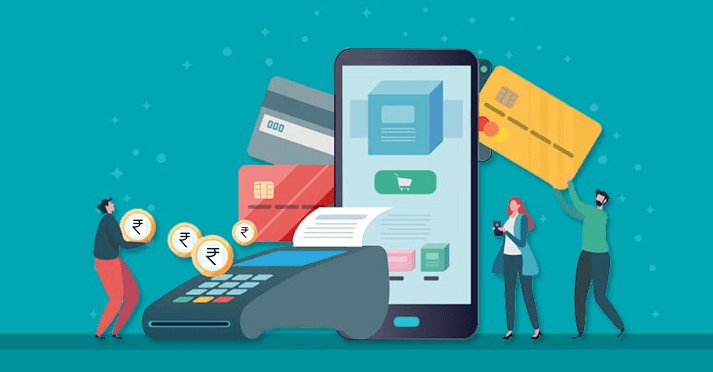
Digital Payment is all about making transactions and accepting payments online i.e. cashless way.

Here are some examples of Digital Payment:

  • NEFT/IMPS transfer via app or any bank’s website (HDFC, AXIS etc )
  • Paytm transaction via app or website
  • Other payment gateways like Paytm (Tez app, Payzap, Rupay, Freecharge, BHIM, UPI)

  •                           
When digital payments—whether on mobile phones, cards, or online —become available to everyone, everyone in the economy can benefit from the outcomes! These include:

-Cost savings through increased efficiency and speed
-Transparency and security by increasing accountability and tracking, reducing corruption and theft as a result
-Financial inclusion by advancing access to a range of financial services, including savings accounts and insurance products
-Women’s economic participation by giving women more control over their financial lives and improving economic opportunities
-Inclusive growth through building the institutions that form the bedrock of an economy and the cumulative effect of cost savings, increased transparency, financial inclusion, and greater women’s economic participation
-Future of Digital Payments

A Payments-as-a-Service provider for businesses, PayStand is the future of digital payments. We provide an enterprise-level payment technology that is sufficiently adaptable for all business needs to process and reconcile payments. Our platform is designed to scale and onboard new users rapidly. Our low-cost, frictionless B2B payment network automates manual processes, lowers transaction costs, and speeds up time-to-cash.

Several key features of the PayStand platform are:

Account Receivable Solution: PayStand now lets you digitise the complete accounts receivable flow. It allows merchants to dramatically improve ROI and maximize efficiency by speeding up time to cash, lowering costs and automating receivables.

Virtual Terminal: A virtual terminal facilitates card not present transactions. It allows the merchant to make payments on behalf of the customer. The customer isn’t required to present his card for the physical examination by the merchant.


Billing Payment Portal: The PayStand Billing Payment Portal lets your customer pay using multiple payment methods (ACH, Credit/Debit cards, Smart ACH). It eliminates juggling multiple payment channels and manual processes. Traditional lockbox services are now replaced with a much more convenient digital solution.


Fund on File: Irrespective of what payment feature customers wish to use, the payment information is tokenized and encrypted so that it can be re-engaged for future charges. This is useful and desirable for recurring payments as information of previous payments is now secure and easily accessible.
All about the Benefits of Digital Payments

  digital payment is safe nowadays but India can't go 100%cashless because of its rigid undeniable fact


All about the Benefits of Digital Payments

India has always been extremely comfortable with the traditional method of making payments, which is “via cash”. Nevertheless, it is imperative to understand how digitization with regard to making payments has helped the country in numerous ways. It is a known fact that India has taken a sharp turn towards “becoming a cashless economy” after demonetization and it has nudged the country even more towards settling as a developed economy.


DIGITAL PAYMENT! It is seen that digital payment is very beneficial when it comes to ease and saving the trees but beside that, there ar...